This blog is dedicated to the environmental well-being of our Florida coastal habitat.

This blog is
dedicated to the environmental well-being of coastal habitat.
Showing posts with label Plants. Show all posts

Sunday, April 15, 2012

Wednesday, January 11, 2012

Seagrapes in Winter

 Seagrapes, as other tropical trees,  drop their leaves late winter to early spring.   These seagrapes are on the back beach and parking lot at Lido Beach in Sarasota,   Many leaves have turned  yellow and brown.

Wednesday, December 7, 2011

Wild Cotton


  Wild cotton is related to commercial cotton,  The USDA attempted to wipe this plant out in Florida in the early 1900s due to the fact that it is a potential host to the boll weevil.  This specimen was growing  at the Orman House State Historical Park in
 Apalachicola.

Thursday, November 24, 2011

Varnish Leaf


Having a  really pretty flower, this shrub was found on the near beach dunes at Caspersen Beach.  The Varnish Leaf usually grows to less than 10 feet tall.  
In Florida, it is restricted to coastal strand and coastal hammocks.

Friday, November 4, 2011

Thursday, November 3, 2011

Poison Ivy


Tuesday, November 1, 2011

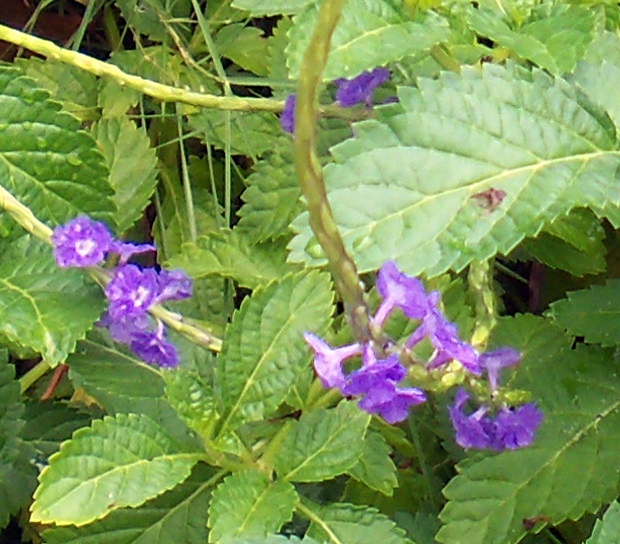
Blue Porterweed

All so familiar, blue porterweed 
is found in plantings at Siesta Beach park.
 They are drought tolerant evergreens, 
but may die back a little in winter.

Sunday, October 30, 2011

Robinson Preserve


Welcome Center - Refurbished Robinson house 


Kayaks are available to rent.
Crotalaria , aka showy rattlebox ,
takes on the appearance of an inflated cylindrical pod.  
The fruit turn brown to black when mature and the seed within the fruit 
often become unattached resulting in a ‘rattlebox’ sound when shaken.

A surprising variety of plant and animal life survives on these Salt Flats.
Glasswort

View north with Tampa Bay in background
more Crotolaria

Thursday, October 27, 2011

Muhly grass at Caspersen Beach

 Clump forming and fast growing,  the grand show of  muhly grass lasts from late summer to fall    Thin, arching leaves are characteristic of this native grass.   Foliage is finely textured and a blue green color.  The flowers turn a buff shade in winter, providing continual visual interest.
Photo by John Sarkozy

Love vines cover live oak trees at Casperson Beach

Native love vines like sandhills, scrub, pinelands, and hammocks.  They are parasitic plants which attach themselves to host plants. Then, they detach from their roots and will eventually kill the host. The vines are leafless  with dense clusters of small white bell-shaped flowers on  orange-yellow stems

Photo by John Sarkozy

Saturday, October 22, 2011

Coral Bean

This coral bean was planted at Hammocks of Nokomis Waterways
last Spring by a group of SE Littoral Society members.  
 Photo by Peg Conklin

Wednesday, September 28, 2011

Perennial Grasswort

 These red flowers thrive on the salt flats of Robinson Preserve
(NW tip of Bradenton on Tampa Bay).
The grasswort is a creeping plant with the flowers on erect stems.

Tuesday, September 6, 2011

Gumbo Limbo

Called the "TOURIST TREE".   Here's why....
 Look at that "sunburn" and peeling skin.
This tree is fairly salt-tolerant and wind-tolerant and 
is recommended as a good, hurricane-resistant species.
Gumbo limbo ranges from Cape Canaveral to 
southern Florida, including the Keys.
 Photo by John Sarkozy

Thursday, September 1, 2011

Dune Sunflowers

At Nokomis Beach, low growing dune sunflowers with brown centers  flower all year round with a short winter die-back.
Don't confuse them with the yellow-centered sea oxeye daisy or camphorweed
Photo by John Sarkozy

Wednesday, August 31, 2011

Monday, August 29, 2011

Slash pines

A group of 3 gallon slash pines were planted by John Sarkozy
at the middle beach in Nokomis.
They're.part of the Hammocks of Nokomis Waterways project.
Aug 2011.
Historically, slash pines were a major resource for the naval stores industry. Pines produced turpentine and crude rosins that were used for a variety of purposes.
A 2 year old slash pine was added to existing pines.
It may live as long as 200 years.

Sunday, August 28, 2011

Black Mangrove "Fruit" in season at Ken Thompson Park

White flowers preceded the seeds.  Black mangroves are the ones with leaves that are coated with excreted salt.  Fresh water is not needed to grow.  The trees have vertical "snorkel roots" to "breathe" through.

Saturday, August 20, 2011

Wednesday, August 17, 2011

Oleanders

The white, pink or red flowers grow in clusters at the end of each branch; Oleander grows well in warm subtropical regions.  The above plant at Siesta Beach was over 8 ft tall. 
Oleander is one of the most poisonous of commonly grown garden plants.